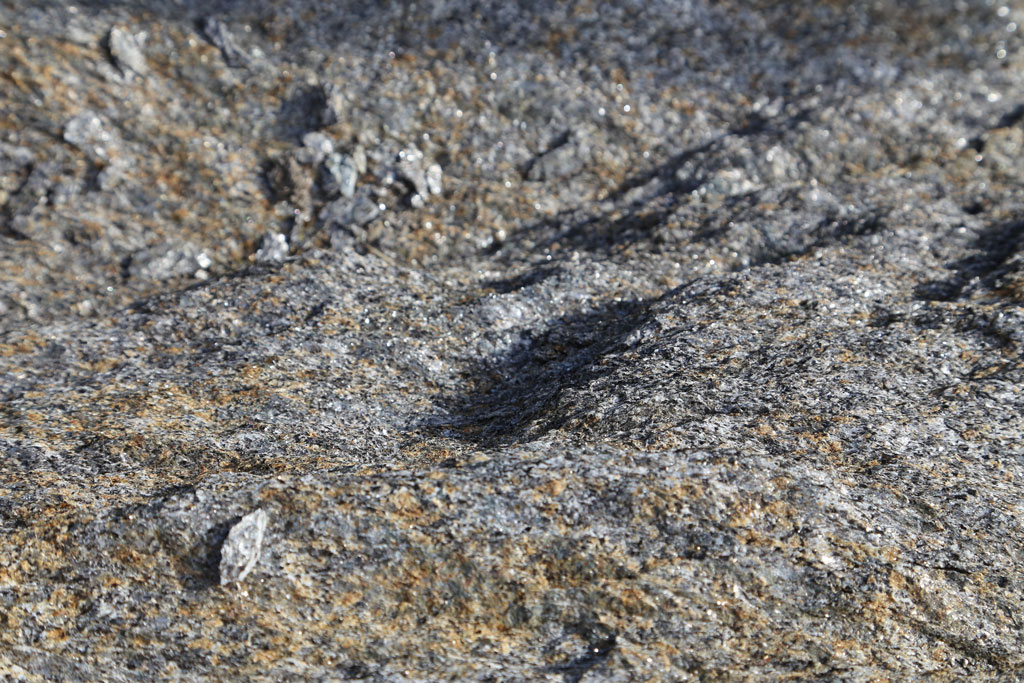
It has now been 10,000 years since humans first settled down. Just imagine how domestic life has changed since then. Starting with rudimentary dwellings, homes have evolved over time into high-tech spaces designed for maximum comfort. Only one aspect of home life has remained true to its original concept: the kitchen. And with it, a building and functional material that has always existed and will certainly outlast humanity: stone.
May 22, 2026
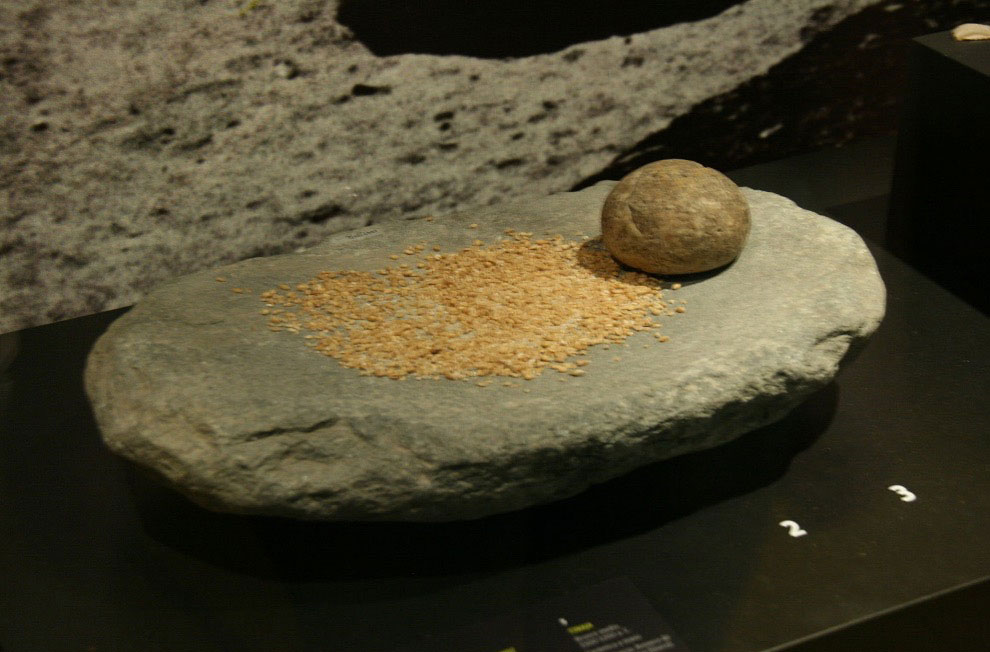
But let’s go back to the beginning. Around 10,000 years ago, toward the end of the Neolithic period, humans began using stone as a tool. At the same time—and likely precisely because of this—they also settled in specific locations, began building dwellings, and took up farming. At that time, the main staple food was grain, primarily the spelt varieties emmer, einkorn, barley, and naked wheat. The grain fields were cultivated using the hoeing method; the grain was cut with sickles, stored in the ears, threshed as needed, and processed into flour or grain grits on stone saddle mills.
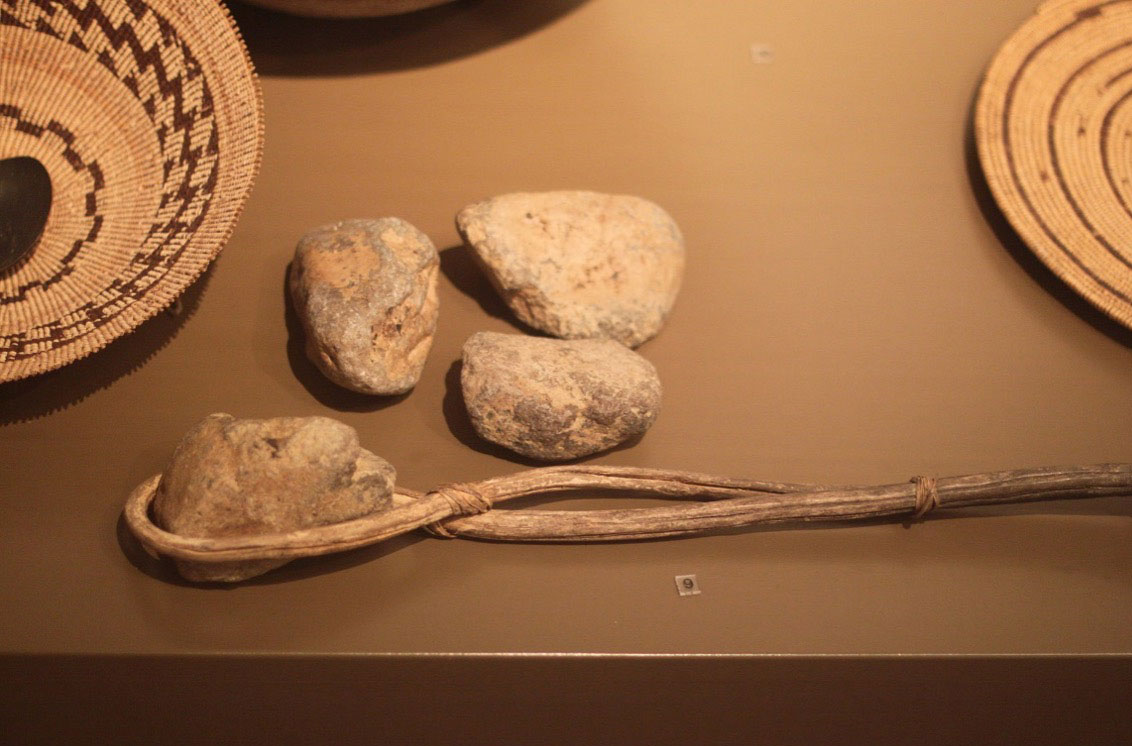
The kitchens were usually located outdoors and shared by several families. They consisted of simple fire pits with separate cooking areas. This is where food was ground, chopped, baked, and cooked. The only way to cook with water at that time was to use cooking stones. In this method, stones heated to a high temperature were placed in liquids, causing them to boil.
Especially in warmer regions, people did not rely on fireplaces for heat. The situation was different in Central and Northern Europe, where the kitchen quickly became the center of domestic life after it was moved indoors.
The kitchen was the only heated room in the house thanks to the fireplace. The rest of the living space was therefore usually designed to benefit as much as possible from the soothing warmth of the fire.
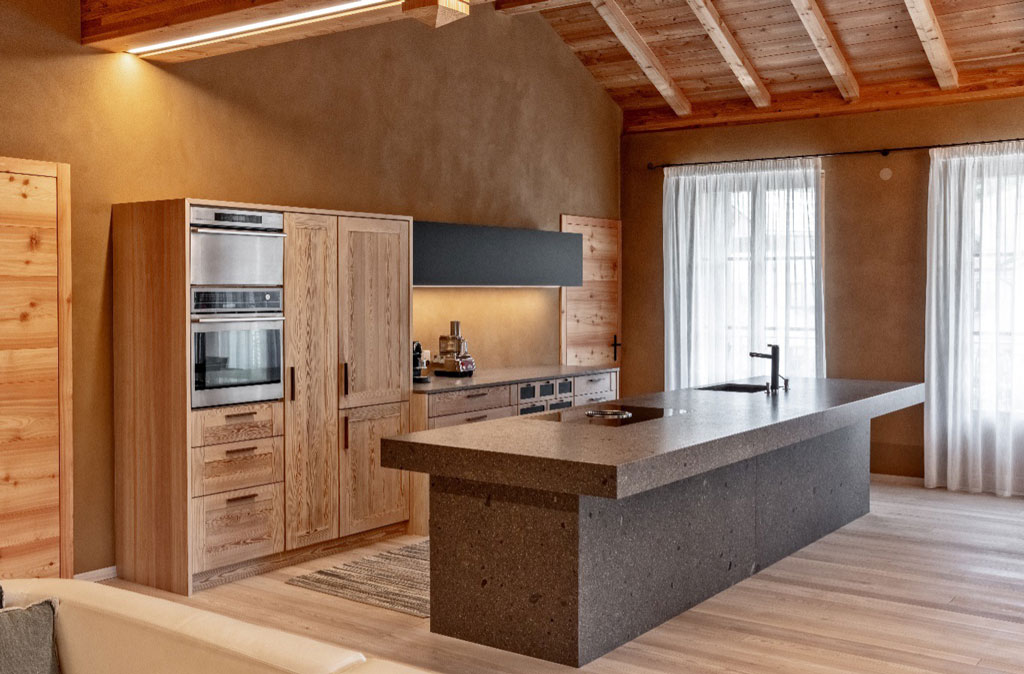
Over the centuries, the kitchen has undergone constant social and technological change, evolving into the space we know today. Yet in one respect, the kitchen has remained true to itself to this day. People still grind, chop, bake, and cook. And stone remains an important material in the kitchen. While it is still frequently used in other cultures for various types of food preparation, in the Western world it is mostly found in the form of natural stone kitchen countertops.

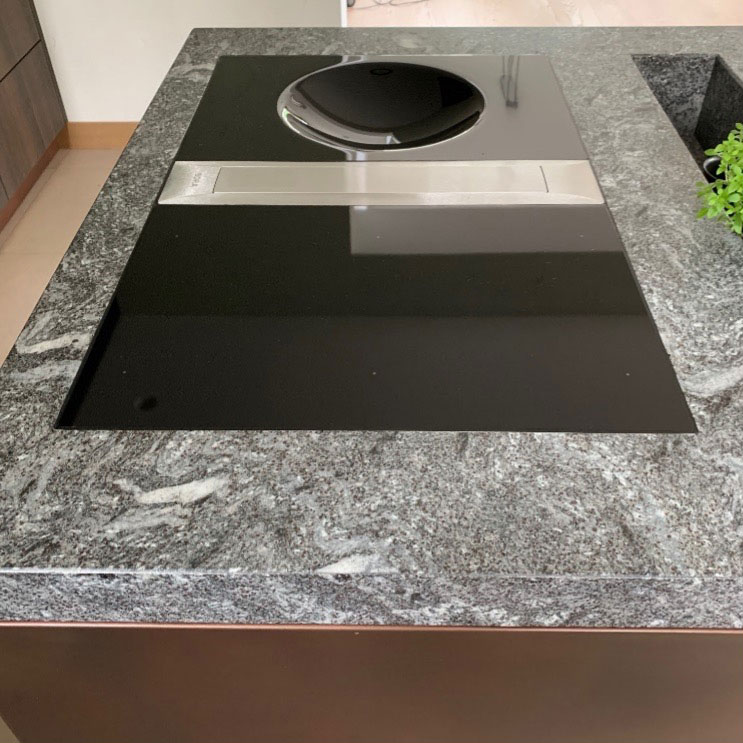
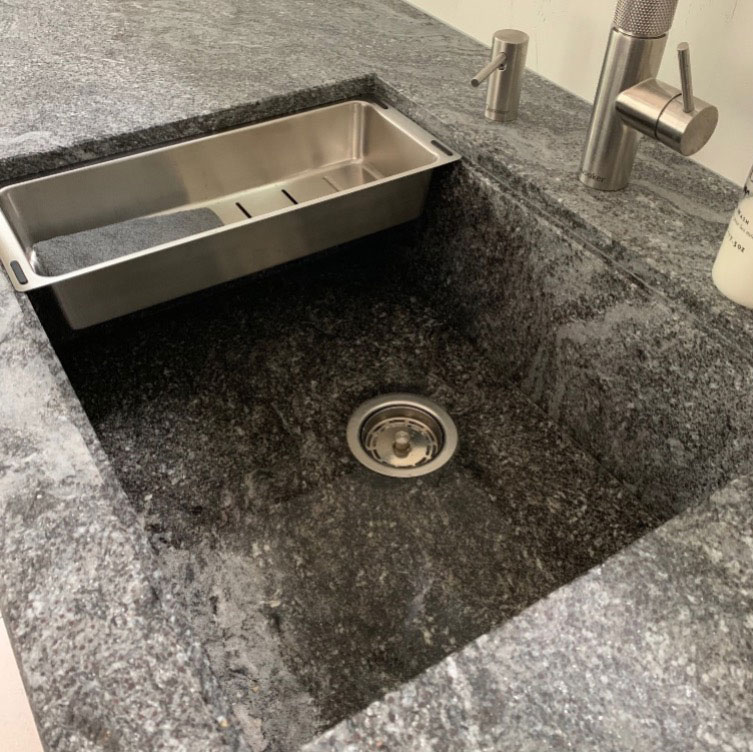
Beyond its technical and sustainable benefits, natural stone holds a very special significance: stone is a piece of nature that you bring into your own living space. It is a material older than anything else, sustaining a natural cycle since the Earth’s inception. A building material that is visually unique and, thanks to a wide variety of surface treatment options, a master of transformation. A part of our living space that, in its durability, will outlast us all. A natural stone countertop is your piece of Earth’s history within your own four walls. The lines and inclusions of various rock types reveal continental plate shifts. Every centimeter is unique and part of this vast and incredible history.
We craft kitchen countertops from various types of South Tyrolean natural stone. We often choose Passeier Gneiss Granate. It has a uniform surface, is rarely veined, and, as a metamorphic volcanic rock, is extremely hard. That is why this gneiss is an ideal surface for a space that serves as the heart of daily life in most homes.
Local natural stones reflect the uniqueness and natural beauty of South Tyrol. By incorporating them into the design of your living spaces, you bring a piece of this magnificent natural spectacle into and around your home, allowing you to see it, walk on it, and appreciate it anew every day.